Quick Facts
| Developer: | Saber Interactive |
| Publisher: | Focus Entertainment |
| Genre: | Heavy Machinery & Construction Simulation / Open-World Logistics |
| Platforms: | Xbox Series X|S (Reviewed), PlayStation 5, PC (Steam, Epic Games Store) |
| Release Date: | May 20, 2025 |
| Tested On: | Xbox Series X|S |
Tearing Through the Wilderness: Unrestricted Open-World Exploration
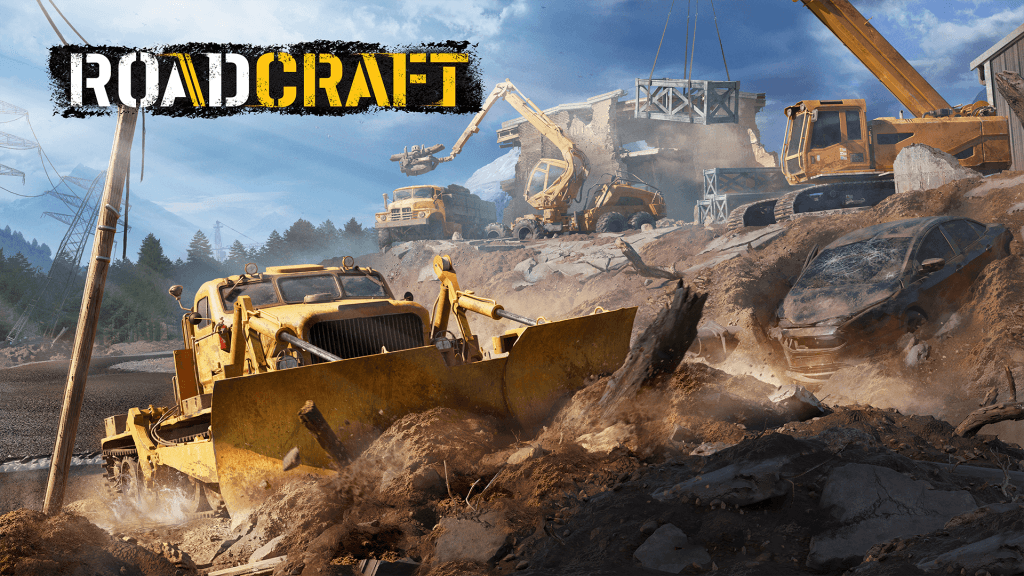
Building upon the physics-heavy foundation established by MudRunner and SnowRunner, Roadcraft shifts the franchise focus from purely surviving harsh terrain to actively repairing and terraforming it. Set across massive 4 km² open-world zones affected by devastating natural disasters, your task as head of a disaster response outfit is to restore critical infrastructure, reconnect isolated settlements, and rebuild industrial supply chains.
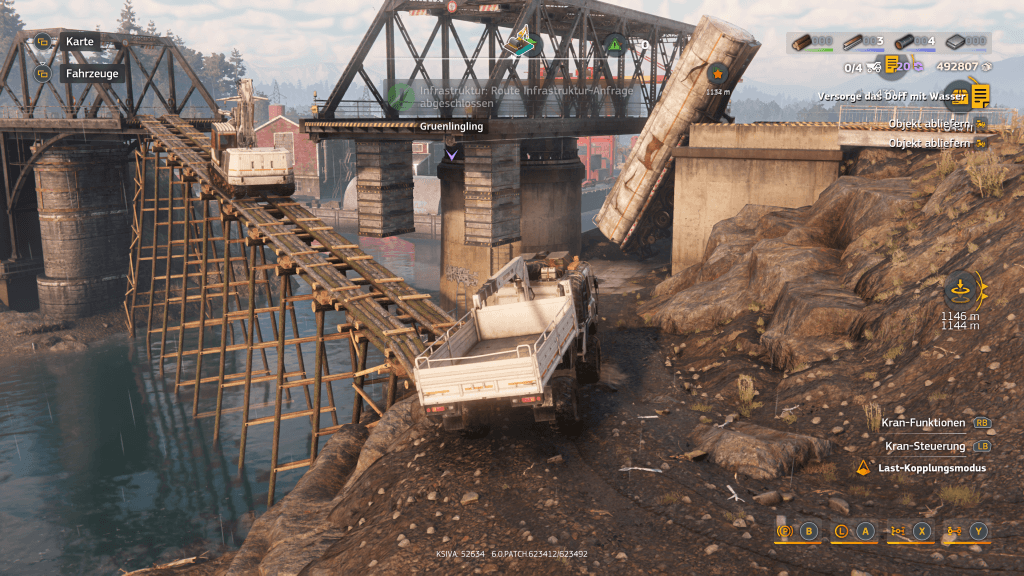
What immediately sets Roadcraft apart is its unprecedented level of environmental freedom. You can drive virtually anywhere across the map, charting your own off-road pathways and cutting through dense forests by simply bulldozing or clearing obstructing trees out of the way. Exploring uncharted valleys and scouting potential routes is immensely satisfying. However, nature frequently fights back: deceptive terrain is littered with sharp rocks and hidden tree stumps that can unexpectedly high-center your heavy dozers and dump trucks. Getting a massive vehicle hopelessly stuck in mud or wedged against an immovable stump serves as a constant, humbling reminder that careful route planning remains essential.
Paving the Way: NPC Routes, Economic Progression & Spawn Tokens
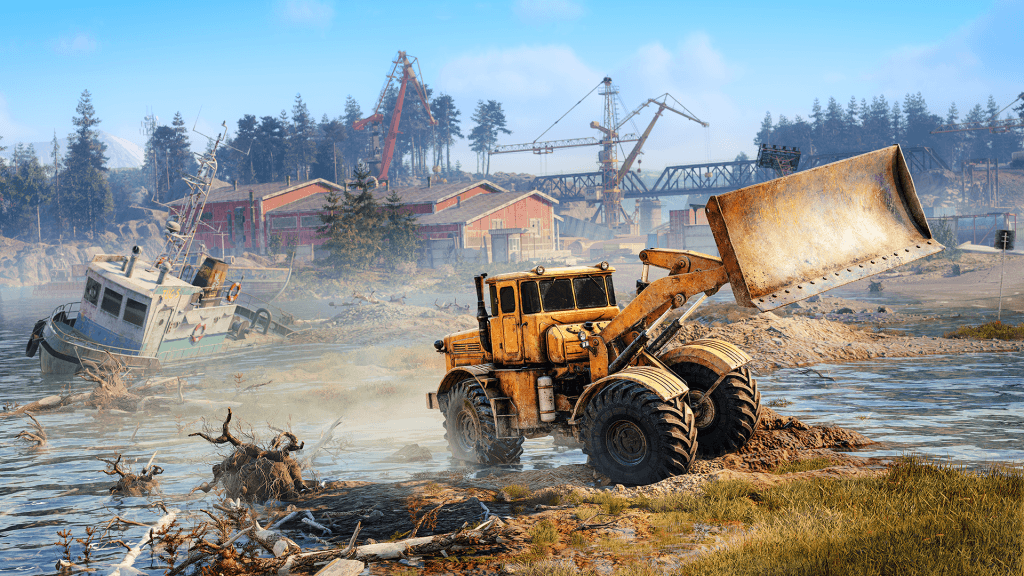
The core gameplay loop revolves around connecting key points on the map by laying down asphalt roads, pouring gravel, and constructing bridges. Once a road link is successfully established, automated civilian and industrial NPC traffic begins utilizing your route. Connecting these points creates a valuable passive revenue stream, supplying your operation with much-needed cash and raw construction materials. However, NPC behavior can be a source of mild frustration: civilian drivers frequently demonstrate bizarre, illogical pathfinding, ignoring your smoothly paved multi-lane roads to take absurd detours into ditches or drive directly into obstacles.
In terms of progression, new maps initially suffer from an intentionally sluggish and overly cumbersome pacing structure. Crawling across untouched mud to haul basic gravel can feel tedious during early map hours. Thankfully, as you establish local infrastructure, the pacing speeds up dramatically. Late-stage progression allows players to bypass long supply runs by purchasing raw materials directly from local depots. Furthermore, the introduction of special vehicle spawn tokens is a massive quality-of-life win: these tokens allow you to summon specialized machinery directly to your location anywhere on the map, eliminating the grueling necessity of driving every newly bought truck all the way from the central garage.
Better Together: Why 4-Player Co-Op Transforms the Experience
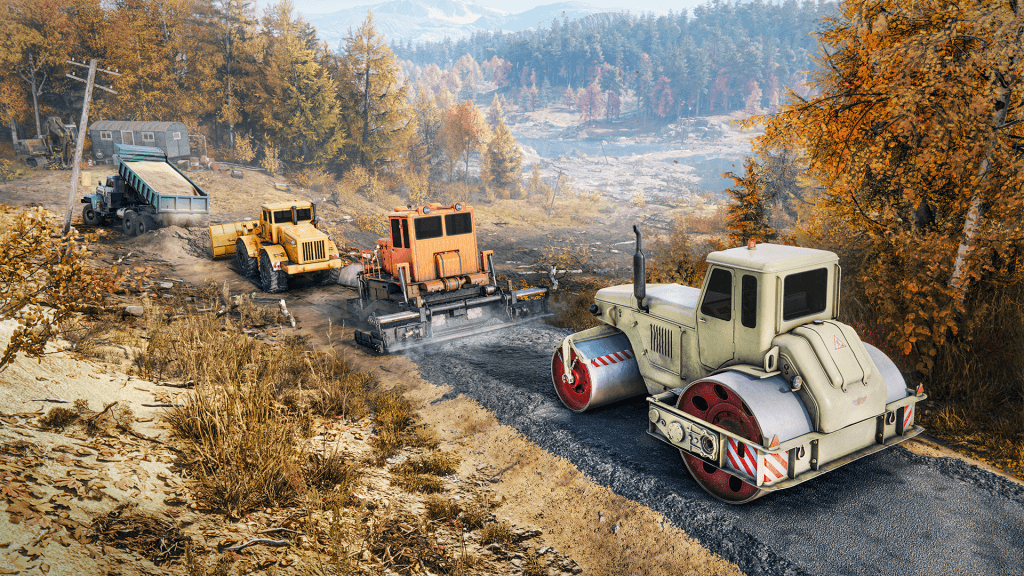
While Roadcraft can be played entirely solo, it is unequivocally designed to be experienced in 4-player online co-op. Playing with a crew of friends fundamentally transforms the gameplay loop from a methodical, sometimes solitary grind into an energetic, highly rewarding team effort. Tasks that feel daunting alone—such as clearing miles of fallen timber, laying continuous asphalt, and transporting multi-part industrial cargo—become streamlined and vastly more enjoyable when split among a coordinated squad.
Multiplayer also completely changes how players handle logistics and accidents. In solo play, flipping a heavy crane or getting a loaded flatbed stuck often means forfeiting progress or paying to recover the vehicle back to the garage. In co-op, teammates can instantly rush to the scene with heavy winches, tow cables, or mobile cranes to perform thrilling field rescues without losing cargo or time. Coordinating a fleet of bulldozers, pavers, and support trucks simultaneously feels amazingly empowering and represents the absolute high point of the game on Xbox Series X|S.
Campaign Structure & Fleet Dynamics: Repetitive Tasks and Redundant Rigs
Where Roadcraft stumbles is in its long-term campaign mission design. Despite the rich narrative setups surrounding regional recovery efforts, the actual mission objectives lack creative variety. Players find themselves repeatedly performing identical tasks—paving road A, hauling cargo B, clearing debris C—wrapped in slightly different story descriptions. After twenty hours of play, the lack of mission diversity becomes noticeable, making the campaign feel artificially padded.
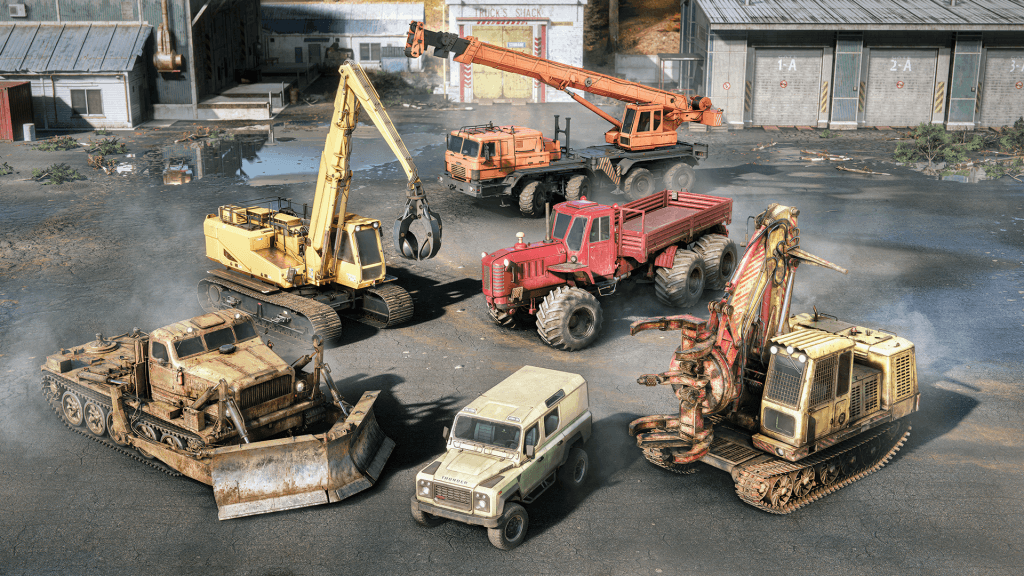
Additionally, while the game boasts an impressive selection of over forty heavy-duty vehicles on paper, the practical vehicle utility feels surprisingly restricted. In reality, a handful of versatile dozers, pavers, dump trucks, and heavy cranes handle 90% of all challenges. Several specialized vehicle types feel entirely redundant or practically useless for main campaign tasks, leaving large portions of the garage underutilized.
DLC Expansions Under the Microscope: Innovative Ideas with Mixed Execution
We also took a close look at the post-launch DLC expansions, which introduce intriguing new mechanics but suffer from minor design flaws:
1. Rebuild Expansion aka Bridge Vehicle DLC
The Premise: Introduces specialized military-grade mobile bridging trucks capable of deploying temporary spans across chasms in seconds.
Our Take: While the vehicle itself is brilliantly engineered and fun to operate, the level design forces its use too aggressively. On DLC maps, standard custom bridge construction mechanics are artificially disabled, forcing players to rely exclusively on the new vehicle rather than offering true tactical choice.
2. Reclaim Expansion aka Demolition DLC
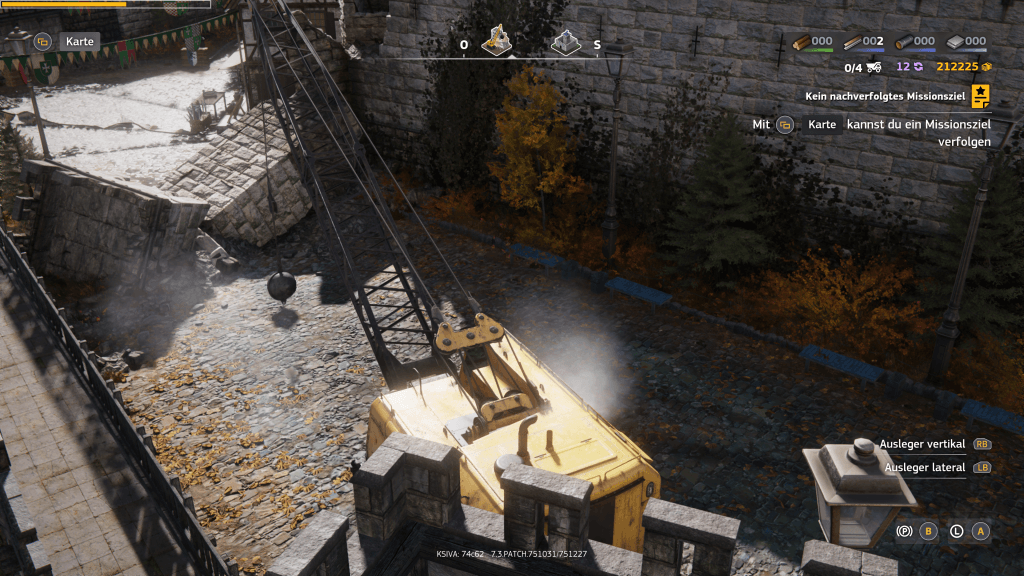
The Premise: Focuses on tearing down hazardous, ruined structures to recycle scrap materials for new construction projects.
Our Take: We loved the non-linear map layout of this expansion, which grants immediate access across the region without artificial chokepoints. However, the expansion is held back by a severe lack of actual destructible buildings on the map, leaving the demolition mechanics feeling underused.
The Verdict: A Satisfying, Co-Op Heavy Construction Sandbox
Roadcraft on Xbox Series X|S is a triumph of physics-based sandbox design that successfully evolves the heavy equipment genre. While its campaign suffers from repetitive mission structures, quirky NPC traffic pathfinding, and underutilized niche vehicles, its core mechanics are exceptionally strong. The freedom to pave your own infrastructure, combined with game-changing vehicle spawn tokens and unmatched four-player co-op dynamics, makes this an absolute must-play for simulation fans and multiplayer crews alike.
(Coop) Rating Summary
PROS:
- Unrivaled freedom to pave roads and build bridges anywhere
- Fantastic 4-player online co-op with field rescue dynamics
- Vehicle spawn tokens eliminate tedious garage backtracking
- Purchasable raw materials smooth out late-game progression
- Satisfying heavy machinery physics and terrain deformation
CONS:
- Repetitive campaign mission objectives
- Illogical NPC traffic pathfinding on paved routes
- Terrain hazards (stumps/rocks) cause frustrating vehicle traps
- Several vehicle types feel redundant or useless
- DLC mechanics feel artificially forced or underutilized
Ready to take command of heavy machinery and rebuild disaster-struck zones? Watch the official Roadcraft gameplay overview trailer below:
Further Information:
Official Saber Interactive Website ||
Publisher Website (Focus Entertainment) ||
Steam Store Page ||
X / Twitter